
Guide · Byte Bunny Technology
My laundromat customers never carry coins: what can I do?
Customers arriving without coins? Compare change machines, tokens, a counter QR, card readers and QR on each washer for a Malaysian laundromat.
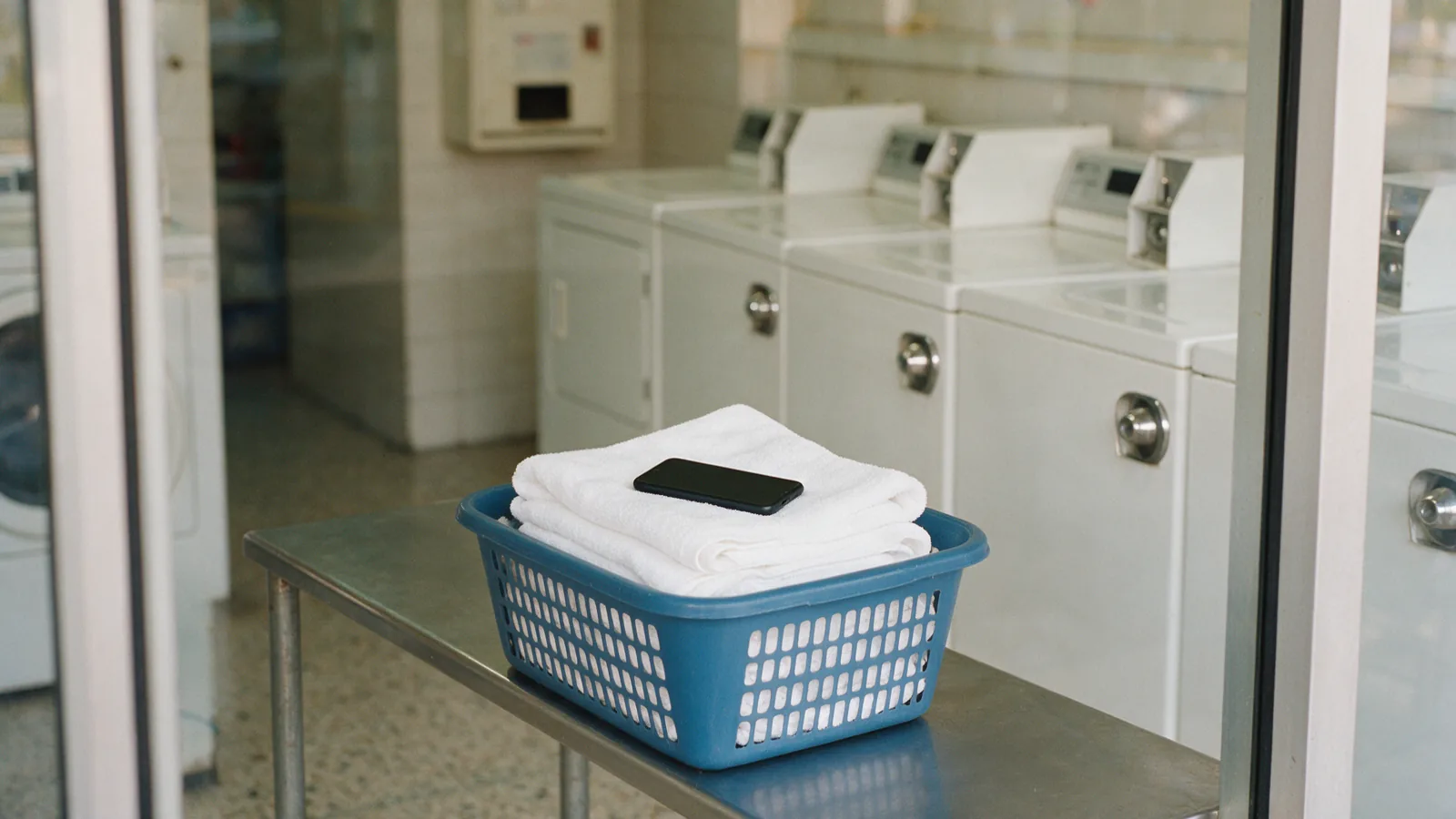
Give customers a way to pay with what they do carry: their phone. A change machine only helps customers who still have notes, and tokens still need cash. A DuitNow QR on each washer and dryer lets a customer with no coins pay from an e-wallet or banking app, and the machine starts. Byte Bunny Technology adds this to existing coin and token machines.
Key takeaways
- A note-to-coin change machine or a token exchange machine only helps customers who still carry notes. A customer who arrives with only a phone still cannot pay a coin laundromat.
- Malaysians are carrying less cash: close to 50 per cent of respondents in Visa's Consumer Payment Attitudes study said they carry less physical cash, and Bank Negara Malaysia reports that DuitNow QR transactions doubled to three billion in 2025.
- One DuitNow QR code at the counter takes the money but cannot start a washer, so it only works when someone is in the shop to check each payment.
- A DuitNow QR on each washer and dryer lets customers pay from the phone they already carry, and the machine starts by itself. Byte Bunny Technology installs an IoT device into existing coin and token machines to do this.
- Adding QR does not have to mean refusing cash: ask the provider whether each machine keeps taking coins or tokens, and how cash and QR sales are reported.
This guide is for self-service laundromat (dobi layan diri) owners in Malaysia whose customers keep turning up without coins: asking around for change, finding the change machine empty, or leaving with their laundry still dirty. It sets out each option, from change machines to a QR code on every machine, and what each one actually fixes. For the full picture of taking a shop cashless, read Byte Bunny's guide to cashless QR payment for coin and token laundromats.
Why do my laundromat customers stop carrying coins?
In Visa's Consumer Payment Attitudes study of 1,000 Malaysians, close to 50 per cent of respondents said they carry less physical cash in their wallets, and Bank Negara Malaysia reports that each Malaysian made 538 e-payments on average in 2025, up from 432 in 2024.
The reasons people gave Visa match what an owner sees at the door: they use more contactless payment methods (61 per cent), more places now accept cashless payments (54 per cent), and carrying cash feels unsafe because it can be lost or stolen (42 per cent). The study was run by CLEAR in October 2023 and reported by the New Straits Times in June 2024.
Bank Negara Malaysia's Annual Report 2025 records that DuitNow QR transaction volume doubled to three billion in 2025, from 1.5 billion in 2024, and that Malaysia had almost three million registered DuitNow QR touchpoints at the end of 2025. Small shops are part of that shift: 267,780 of the 681,250 new DuitNow QR acceptance points added in 2025 were at micro, small and medium enterprises, PayNet reported in April 2026.
Laundromats were built around coins. When Visa brought contactless card payments to a Malaysian laundromat chain in 2019, its release noted: "Traditionally, Malaysians can only use cash and coins to make payments when they bring their clothes to the laundromat."
"More merchants and consumers see the benefits of digital payments as a convenient and secure way to pay."
What does a customer without coins cost my laundromat?
A customer without coins costs a coin-only laundromat the wash they came for. If there is no change machine, or it is empty, or the customer carries no notes either, they leave with their laundry, and the machine that was free to earn sits idle. The loss is easy to miss, because a sale that never happened leaves no record in the takings.
That is why it is worth counting before deciding anything. For one week, note down:
- how many customers ask you, your staff or other customers for change;
- how often the change machine runs out of coins or refuses a note;
- how many people walk in, look at the machines and walk out again;
- how often someone asks whether the shop takes QR or e-wallet payment.
Coins also cost the owner time and risk. Every coin a washer takes has to be collected, counted, banked and kept safe, and an unattended machine holding coins overnight is a target. Bank Negara Malaysia makes the general point in its Annual Report 2025: "lower cash handling mitigates operational and security risks."
What are my options when customers have no coins?
A laundromat owner whose customers have no coins has five common options: a note-to-coin change machine, tokens sold from an exchange machine, one DuitNow QR code at the counter, a card reader, or a DuitNow QR on each washer and dryer. The options differ on the question that matters most here: can a customer who carries only a phone still pay and start a machine?
| Option | Customer with notes but no coins | Customer with only a phone | Does the machine start without staff? | What it adds to the shop |
|---|---|---|---|---|
| Note-to-coin change machine | Can pay: swaps notes for coins | Cannot pay | Yes, once the customer has coins | A changer to keep stocked with coins and emptied of notes |
| Tokens from an exchange machine | Can pay: buys tokens with notes | Cannot pay, unless the exchange machine itself takes a cashless payment | Yes, once the customer has tokens | Machines set to tokens, and one machine holding the cash |
| One DuitNow QR at the counter | Can pay by QR | Can pay | No: someone has to check the payment and start the machine | A merchant QR from a bank or e-wallet provider |
| Card reader | Can pay by card | Only with a card, or a phone set up to pay by card | Depends on how the reader is linked to the machines | A terminal at a counter, a kiosk or each machine |
| DuitNow QR on each washer and dryer | Can pay by QR | Can pay from an e-wallet or banking app | Yes: the confirmed payment starts the machine | A device installed into each existing machine, plus its QR |
For a side-by-side of how customers and owners live with each way of paying, see coins, tokens or QR payment: which suits a self-service laundromat.
Is a change machine enough?
A change machine is enough only if your customers still carry notes. A note-to-coin changer helps the customer who has a ringgit note but no coins; it does nothing for the customer who has neither. It also adds a machine to keep filled with coins and emptied of notes, which means more cash on site, not less.
Do tokens solve the problem?
Tokens move the problem rather than solve it. A customer still needs cash to buy tokens from the exchange machine before using a washer or dryer, so a customer without cash is no better off. Tokens do keep coins out of the washers, and the cash collects in one machine instead. Byte Bunny lists coin and token exchange machines among the self-service machines it serves, so ask which arrangement suits your shop.
Why not just put up one DuitNow QR code?
One DuitNow QR code takes the money but cannot start a washer. In the flow Payments Network Malaysia (PayNet) sets out, the customer scans the merchant's QR and keys in the amount, and PayNet's developer documentation says the acquirer "notifies Merchant on successful QR Payment status". In a shop with nobody at the counter, nobody is there to check the payment and start the right machine.
Getting a merchant QR itself is simple. PayNet says merchants first choose an acquirer, a participating bank or e-wallet provider, and that businesses with valid SSM registration or trading licences are eligible to register. Why a plain QR cannot start a machine, and what an upgrade adds, is explained in can existing coin or token laundromat machines accept DuitNow QR?
What about a card reader?
A card reader serves customers who carry a debit or credit card, and tapping is now common: Bank Negara Malaysia counted two billion contactless payment transactions in 2025, up 20.3 per cent on 2024. Visa brought contactless card payment to a Malaysian self-service laundromat chain in 2019. Before choosing a reader, ask what the terminal costs, what each payment is charged, and how a payment at the reader starts the right machine.
What does a QR on each machine change?
A DuitNow QR on each washer and dryer is the option built for the customer who carries only a phone. The customer pays from the e-wallet or banking app already on that phone, and because the payment is linked to the machine, the machine starts without anyone checking. The owner keeps the washers and dryers already in the shop; only the way each one is paid for and started changes.
How does Byte Bunny's QR upgrade help customers who have no coins?
Byte Bunny Technology lets a customer with no coins pay an existing coin or token washer or dryer by DuitNow QR. It installs an IoT device, an internet-connected unit, into the laundromat owner's existing machines; the customer scans the QR on the machine and pays, and Byte Bunny's servers then start the machine. The owner keeps the machines already in the shop.
At an upgraded machine, the customer pays in three steps, as Byte Bunny's own how-to films show them:
- Open your e-wallet or banking app. The Malay caption in Byte Bunny's washer film reads "Buka apps e-wallet".
- Open the app's scanner and scan the QR on the machine. In the film: "Buka scanner dan scan QR".
- Pay the machine's price. In the film: "Bayar ikut harga mesin basuh". The machine then starts.
The 31-second washer film and the dryer film are captioned in Malay; the English-captioned Electrolux dryer film opens with "Open our Bank apps", so a banking app works too. What the customer sees at the machine is shown step by step on how paying by QR works at a self-service machine.
For customers, Byte Bunny lists benefits: hassle free, with no apps to download; many e-wallet payment methods available; and prevents theft, with no need to bring cash. For owners, its list includes providing alternative payment methods to customers, monitoring cash sales and e-wallet sales, reducing overhead costs, and machines that can be remotely activated. Byte Bunny Technology Sdn Bhd, of Petaling Jaya, Selangor, provides this as a software service; laundromats are its main focus, and its team has more than 10 years of experience in the e-wallet automation industry.
Customers turning up without coins? WhatsApp Byte Bunny a list of your washers and dryers at +60 19-279 2968 and ask which of them can take DuitNow QR.
Should my laundromat stop taking coins altogether?
A laundromat does not have to stop taking coins to serve customers who have none. Adding DuitNow QR gives the customer without coins a way to pay; it does not have to take coins away from customers who still prefer them. Whether each upgraded washer or dryer keeps taking coins or tokens is a question to settle with your provider, machine by machine, before you agree to anything.
Keeping both makes sense if some regulars pay only in cash, or do not use an e-wallet or banking app. Byte Bunny's owner benefits include monitoring cash sales and e-wallet sales, so ask how the two will be reported together. Over a few months, the split between cash and QR in a laundromat's sales shows how many customers still need coins, which is a better basis for the next decision than a guess.
What should I do this week?
Start by measuring the problem, then list your machines, then talk to a provider with specific questions. A week of counting shows how often customers arrive without coins; a list of every washer and dryer lets a provider confirm what can be upgraded; and a short set of questions protects the owner from surprises on cost, refunds and payouts.
- Count for one week. Requests for change, times the changer ran out, and people who walked out without washing.
- List every machine. Washer or dryer, brand and model, and whether it takes coins or tokens today. A photo of each coin or token slot and model plate helps.
- Decide whether the shop must run without staff. If it must, a single counter QR will not work: the payment has to start the machine.
- Ask the provider four things. The cost, up front and ongoing; the internet connection the devices need; who refunds a customer whose machine does not start, and when QR takings are paid out; and whether coins or tokens keep working after the upgrade.
- Plan how customers will learn it. Put the three payment steps on or beside each machine; Byte Bunny's how-to films are a ready-made explanation.
A longer list of checks is in what to check before upgrading coin or token machines.
Ready to stop turning customers away? Send Byte Bunny your list of machines on WhatsApp at +60 19-279 2968, or contact Byte Bunny by phone or email.
Frequently asked questions
More answers are on the Byte Bunny FAQ, and every guide is listed on Insights.
Will a change machine solve the problem of customers with no coins?
A change machine solves the problem only for customers who still carry notes. A note-to-coin changer swaps notes for coins, so a customer who arrives with only a phone, or only a card, still cannot pay a coin washer. To serve that customer, the washer or dryer itself has to accept a cashless payment such as DuitNow QR.
Can I just display my DuitNow QR code for customers to scan?
A displayed DuitNow QR code takes the customer's payment, but it does not start the washer or dryer. In PayNet's flow, the acquirer tells the merchant the payment succeeded, so someone has to check each payment and start the right machine. For an unattended self-service laundromat, the QR has to be linked to the machine itself.
Do my customers need to download an app to pay by QR?
Customers do not need to download a new app to pay a Byte Bunny washer or dryer by QR. Byte Bunny's customer benefits include no apps to download: customers use the e-wallet or banking app already on their phone, scan the QR on the machine and pay the machine's price, and the machine then starts.
Do I need to buy new machines to take QR payment?
A laundromat owner does not need new machines to take QR payment with Byte Bunny. Byte Bunny installs an IoT device into an owner's existing machines so they can accept DuitNow QR, and it works with owners whose machines previously took tokens or cash. Send Byte Bunny a list of your machines and ask it to confirm each one before you commit.
Which e-wallets can my customers pay with?
DuitNow QR in general works across providers: PayNet says one DuitNow QR accepts payments from all participating banks, e-wallets and third-party providers. Byte Bunny's customer benefits include many e-wallet payment methods, and its films show banking apps working too. Ask Byte Bunny for the current list of apps that work at your machines.
Sources
- New Straits Times, "Visa study says more than two-thirds of Malaysian consumers have tried to go cashless", 19 June 2024 (Visa Consumer Payment Attitudes study, run by CLEAR in October 2023, 1,000 Malaysians aged 18 to 65): nst.com.my
- Bank Negara Malaysia, Annual Report 2025, "Promoting Safe and Efficient Payment and Remittance Services": bnm.gov.my/publications/ar2025/ch1e
- PayNet, "8.44 Billion Transactions Processed in 2025 as Digital Payments Become Malaysians' Preferred Way to Pay", April 2026: paynet.my press release
- PayNet, DuitNow QR: paynet.my/personal-solutions/duitnow-qr.html
- PayNet Developer Portal, DuitNow QR, Merchant-Presented Domestic QR: docs.developer.paynet.my
- PayNet Knowledge Base, "How do merchants onboard to DuitNow QR?": knowledgebase.paynet.my
- Visa Malaysia, press release on contactless payments at a self-service laundromat chain, 31 July 2019: visa.com.my
- Byte Bunny Technology, how-to films: washer and dryer (YouTube, @ByteBunnyTech); Electrolux dryer (Facebook)
Related reading
All guides are on Insights. Laundromat owners start with cashless QR payment for coin and token laundromats.